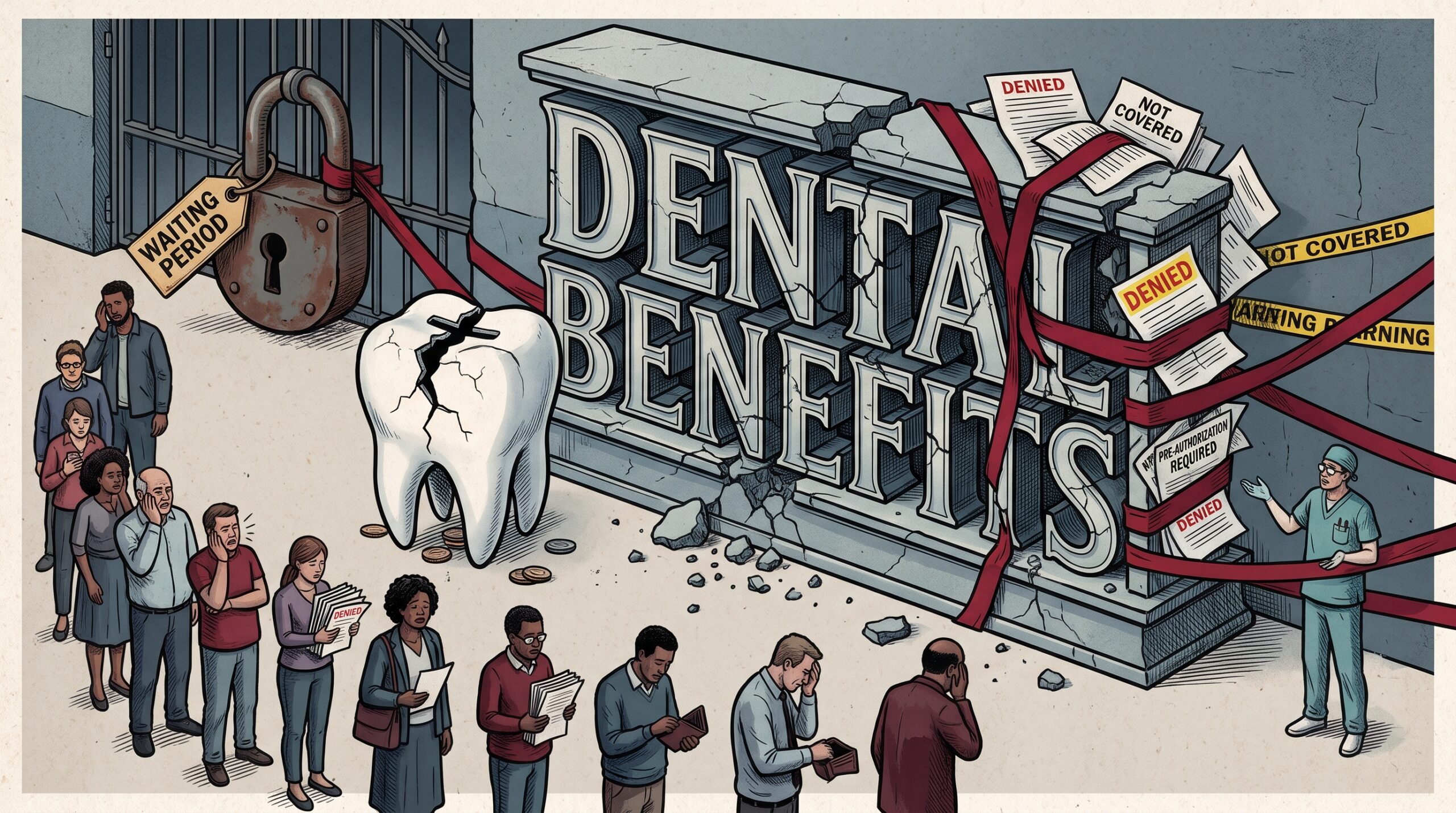
The Current Dental Benefit System is Broken.
For decades, the traditional dental insurance model has remained largely unchanged—operating on outdated assumptions that prioritize cost containment over long-term patient health. As our clinical understanding of the vital link between oral and systemic health continues to grow, it is clear that the current benefit structure no longer serves patients or providers. This resource outlines the systemic flaws in modern dental benefits and provides actionable steps for dental professionals and advocates to help reshape the future of oral healthcare.
- The Dental Insurance System Is Outdated
The dental insurance model was developed more than 60 years ago and has changed very little despite advances in dental science and our understanding of the relationship between oral and systemic health. Traditional dental plans were designed primarily to control costs, not to promote long-term health outcomes. They were conceived during an era when tooth loss was widely accepted as a natural consequence of aging. Modern science tells us otherwise.
Today, our goal should be to maintain healthy, functional teeth for a lifetime. Dental benefits should support prevention, preservation, and optimal oral health rather than focus primarily on annual maximums and dental insurance loss ratios.
- A System Increasingly Focused on Cost Rather Than Care
Dentists originally created dental benefit programs, including California Dental Service, the predecessor of Delta Dental. These programs once represented a promising approach to making dental care more accessible. However, decades of competition among insurance carriers have increasingly emphasized low premiums over meaningful coverage and quality of care.
Benefit maximums have remained largely stagnant, while administrative requirements, paperwork, delayed reimbursements, and restrictive coverage policies have created additional barriers for both patients and dental practices. Insurance denials frequently challenge clinically appropriate treatment, often requiring costly appeals and additional administrative effort. The result is a system that can interfere with the very care it was intended to support.
- Dentistry’s Place in the Larger Healthcare Picture
The rising cost of medical insurance has placed increasing pressure on employers, who are the primary purchasers of health benefits in the United States. Medical insurance consumes a substantial portion of employer healthcare budgets, often leaving dental benefits with lower priority.
Medical care also carries significant administrative costs and inefficiencies. Dentistry, by comparison, represents a relatively small portion of total healthcare expenditures and operates with a much leaner delivery model. Yet dental benefits are frequently treated as expendable when employers evaluate healthcare spending.
This is particularly shortsighted given the growing evidence that oral health is closely connected to overall health. Dentistry should ultimately become better integrated with medicine, but we must be careful not to adopt the administrative inefficiencies and financial challenges that currently burden the medical system.
- Reform Requires Leadership, Personal Engagement of Dentists and a Long-Term Vision
Meaningful reform will require more than simply increasing annual benefit maximums. Dentistry must do a better job educating the public, employers, and policymakers about the value of maintaining optimal oral health throughout life. The public must demand change to convince our politicians to support needed change.
We should aim for short term relief to help our young dentists maintain their practices. While improvements to existing dental plans may provide short-term relief, they will not necessarily correct the fundamental flaws in a system designed around outdated assumptions. We must recognize that the current model does not adequately support the modern objective of preserving natural teeth and maintaining lifelong oral health.
Dollars used toward care are being usurped by administrative personnel that do not provide clinical care to patients. These administrative loads make healthcare less efficient directing dollars to non-clinical personnel.
- Dentistry Must Lead the Next Generation of Dental Benefits
Dentists were instrumental in creating dental benefit programs that addressed the needs of their time. We are now in the best position to develop a new model that reflects today’s clinical knowledge and healthcare objectives.
Clinicians must have a meaningful role in shaping benefit policies so that treatment decisions and coverage structures are driven by patient health outcomes, clinical evidence, and long-term sustainability.
Our profession should pursue two parallel objectives: seek practical improvements to the existing dental insurance system while developing an alternative benefit model designed by dentists.
The guiding principle for that new model should be simple: Teeth for a Lifetime. Optimal Oral Health for a Lifetime.
The future of dental benefits should be built around preserving health, not simply only paying for the consequences of its loss and ignoring the needs of our patients.
What You Can Do
- Go to the CDA website for Future of Dentistry (https://www.cda.org/about/future-of-dentistry ) Go to the bottom right of the page and tell CDA about your perspectives – all input is reviewed by CDA and Future of Dentistry work group!
- Talk to your patients and let them know adult care is not designed to help people keep teeth for a lifetime. It does not provide comprehensive benefits and does not focus on health outcomes for their programs.
- Write your politicians and explain how dental insurance interferes with the doctor patient relationship. Insurance micromanages care and increases the cost of providing care. They don’t rely of their maximum allowances to control cost but instead rely on creating roadblocks to care.
- Become knowledgeable, reach out to key individuals who can convince their HR to ask for better dental benefits.
- Fill out the form below to join the Bay Area Dental Insurance Reform Committee. We want to start a movement toward reform.
(FREE) SIGN UP FOR THE NEXT BADIR TOWNHALL
DEC 8 6:30 to 7:30 – to learn about the economic forces at work affecting dentistry and dental benefit programs.
Recommended Reading & Resources
Books on Dental Benefits and Practice Independence
“Dental Benefits: A Guide to Dental PPOs, HMOs and Other Managed Plan” by Donald S. Mayes
“The Healing of America: Global Quest for Better, Cheaper and Fairer Health Care” by T. R. Reid
“Priced Out: The Economic and Ethical Costs of American Health Care” by Uwe E. Reinhardt
“Risky Business: Why Insurance Markets Fail and What to Do About It” by Liren Einav
NOTE: This book is a bit eclectic to the reading list but if you want a business insurance perspective to round out your reading this book can add to your expertise.
Policy Reports & Economic Research
-
ADA Health Policy Institute (HPI) — Dental Benefits & Workforce Research
Offers data-driven briefs and annual reports tracking stagnant dental insurance maximums, inflation-adjusted reimbursement trends, employer benefit spending, and patient utilization barriers. -
World Economic Forum & FDI World Dental Federation: The Economic Rationale for a Global Commitment to Invest in Oral Health
A landmark economic report making the financial case to employers and policymakers that preventive oral healthcare reduces downstream systemic medical costs and boosts workforce productivity. -
CareQuest Institute for Oral Health — Research Library
Provides accessible white papers and data visualizations on medical-dental integration, the true cost of untreated dental disease (such as preventable emergency department visits), and value-based care models.
Advocacy Toolkits & Legislative Trackers
-
ADA Dental Insurance Reform Advocacy Hub
Tracks state-by-state legislative wins and model bills targeting insurance overreach—including Medical Loss Ratio (MLR) laws, non-covered services caps, network leasing restrictions, and virtual credit card fee bans. -
California Dental Association (CDA) — Dental Benefit Plan Resources & Advocacy
Provides California-specific legislative updates, contract analysis tools, and resources for addressing payer practices directly with state regulators and lawmakers.